
For a roofing company, GoHighLevel is the homeowner-facing system: it answers the missed call, follows up the inspection request within minutes, books the inspection, chases the estimate, keeps the homeowner informed through the insurance process, and asks for the review when the job closes. It is not the claims and production system of record; scope writing, supplements and depreciation tracking still belong in roofing software such as JobNimbus or AccuLynx. This guide shows how we structure GoHighLevel for retail and storm-restoration roofers, the pipeline we use, the automations that pay for themselves first, and where the limits are.
What changes for a roofer with a properly built GoHighLevel account
- No lead waits: calls, forms and ad leads get a text within a minute and an inspection slot the same day where possible.
- A pipeline from lead to review that shows where every job is, including the insurance steps the homeowner cares about.
- Estimate follow-up and homeowner updates that no longer depend on the salesperson's memory.
- Storm-season volume handled without hiring temporary office staff.
- Reviews requested at the right moment, which feeds the next season's leads.
Why roofing companies lose jobs they already paid for
Roofing leads are expensive and perishable. A homeowner with a leaking roof calls three companies; the one that answers and books first usually wins. During a storm, the same office that handles ten calls a day takes a hundred, and the voicemail fills. After the inspection, the estimate goes out and the follow-up depends on whether the salesperson is on a roof or in the truck. Between the insurance adjuster's visit and the approval, the homeowner hears nothing and starts calling other roofers. None of this is a sales skill problem; it is a follow-up system problem, and that is what GoHighLevel is for.
- 1Discovery
- 2Architecture
- 3Build
- 4Integration with the roofing software
- 5Testing
- 6Launch before storm season
- 7Training
- 8Review at 30 days
Source: the rollout plan described in this guide
The roofing pipeline we build
- New lead
- Contacted
- Inspection booked
- Inspected
- Estimate sent
- Insurance filed
- Adjuster met
- Approved / Signed
- In production
- Complete
- Review requested
Retail (cash) jobs skip the insurance stages. Storm-restoration companies often run two pipelines, retail and insurance, because the follow-up timing and the messages differ. Lost reasons are recorded (went with another contractor, claim denied, decided to wait) so the reporting shows what is really happening.
GoHighLevel architecture for a roofing company
Contact fields and tags
Property address and roof type, lead source (ad, referral, door knock, storm list), damage type, insurance carrier and claim number where applicable, assigned salesperson and crew, inspection date, estimate amount, and SMS consent with date and source. Tags for storm event, neighbourhood and job type make segmentation and reporting possible later.
Calendars
Inspection calendars per salesperson or territory with drive-time buffers, a separate calendar for adjuster meetings, and round-robin assignment during storm surges so bookings spread across the team.
Conversations and phone
One inbox for calls, texts and web chat per office; tracked numbers per lead source so the reporting shows which ads and lists produce booked inspections; call recording where state law allows.
Team structure
Office staff see everything; salespeople see their own opportunities and tasks; crews see schedules only. Roles are set so a departing salesperson does not take the pipeline with them.
The automations that pay for themselves first
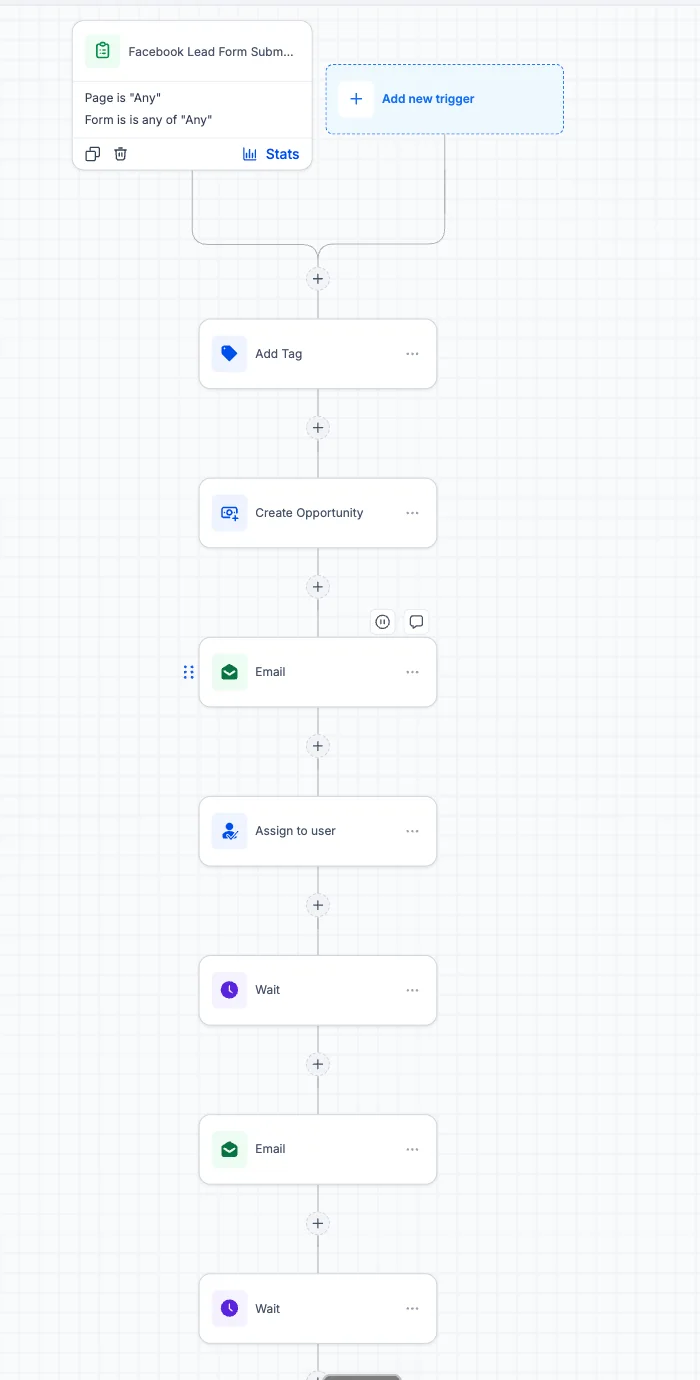
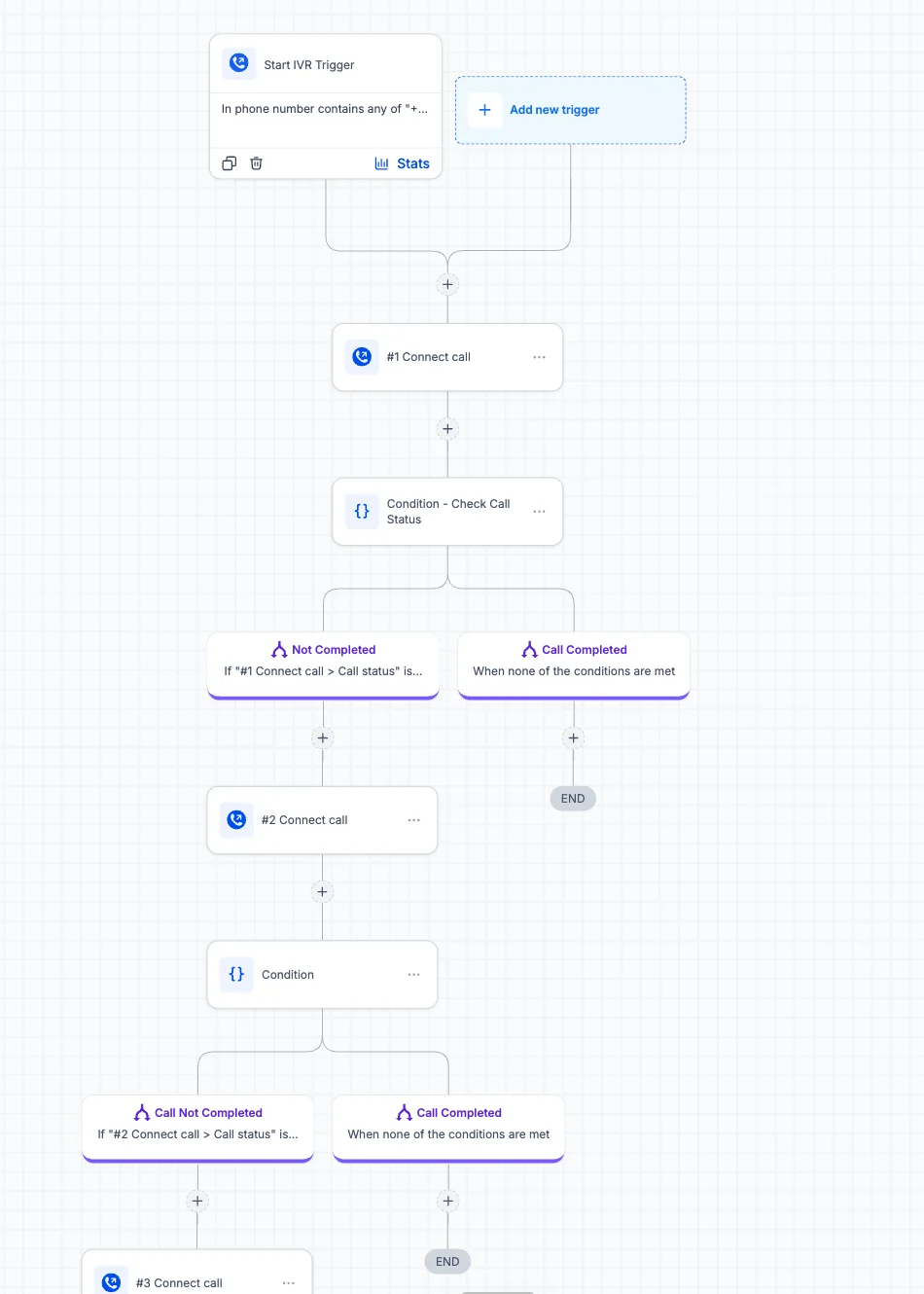
- Missed-call text back. Within seconds of a missed call: a text that names the company, apologises, and offers an inspection booking link or a callback window. During storms this single workflow recovers more jobs than any other.
- Speed-to-lead for forms and ads. Text and email within a minute, a task to the assigned salesperson, and a booking link when the office is closed. Office-hours rules keep texts polite.
- Inspection lifecycle. Confirmation with the salesperson's name and photo, reminder the evening before and the morning of, a what-to-expect message, and a reschedule link. No-shows (homeowner not home) get a same-day re-booking text.
- Estimate follow-up. A sequence over ten to fourteen days after the estimate: a summary, a financing or warranty note, a check-in from the salesperson, and a final courteous close with a task to call. Stops the moment the stage changes.
- Insurance-stage homeowner updates. Claim filed, adjuster meeting scheduled (with what the homeowner should prepare), waiting for approval, approved and next steps. These are plain-language status messages, not claims work, and they are what keeps the homeowner from calling a competitor during the wait.
- Production and completion. Material delivery notice, install day reminder with crew arrival window, completion message with warranty documents, and the review request routed by rating.
- Seasonal reactivation. Past inspections that did not close, offered a maintenance check before storm season; past customers, offered gutter or inspection services annually.
Storm season: what GoHighLevel can and cannot do
Storm-restoration marketing often promises automated outreach to affected neighbourhoods within minutes of a hail event, fed by storm-data providers. The mechanics are real: a list of addresses can be imported or sent by webhook, tagged with the storm event and worked through a sequence. Two cautions before you build that.
- Consent. Texting people who have not contacted you requires prior express written consent for autodialed marketing messages, and US carriers enforce A2P 10DLC registration to verify consent integrity. Cold storm texting risks a rejected campaign or a complaint. Our storm workflows are built for people who responded to a door knock, a mailer or an ad, and for past customers who opted in. See our guide to A2P registration rejections for what reviewers look for.
- Capacity. Automation books inspections faster than crews can inspect. Calendars need realistic limits per day and per territory, or the system creates no-shows of its own making.
What GoHighLevel does well in a storm: answer everything, book within capacity, keep every homeowner informed, and show the owner a live pipeline of hundreds of jobs by stage.
What stays in your roofing software
| Function | System of record | GoHighLevel's role |
|---|---|---|
| Measurements, scope writing, Xactimate, supplements | Roofing CRM or estimating software (JobNimbus, AccuLynx, Roofr and others) | Receives stage changes and amounts by integration so homeowner messages stay accurate |
| Insurance claim documentation and adjuster correspondence | Roofing CRM | Homeowner-facing status updates only |
| Production scheduling, crews, materials | Roofing CRM or production board | Homeowner notifications triggered by production dates |
| Invoicing and payments | Accounting or roofing software; GoHighLevel payments for deposits where preferred | Payment reminders |
| Lead capture, speed-to-lead, booking, follow-up, reviews, reactivation | GoHighLevel | System of record for the homeowner relationship |
The integration between the two is the part most roofers skip. A webhook or Zapier connection that moves the job stage and the estimate amount from the roofing software into GoHighLevel is what makes "your adjuster meeting is Tuesday at 10" messages possible without someone typing them.
Integrations roofers usually need
- Roofing CRM or estimating software, by native connector where available, otherwise Zapier, Make or webhook.
- Google Business Profile for calls and reviews (Google ended Business Profile chat on July 31, 2024).
- Facebook and Google lead forms, mapped to source fields.
- Financing provider links and warranty documents as custom values in messages.
- Call tracking numbers per source, inside GoHighLevel.
Reporting the owner should see
Leads by source; time to first contact; inspection booking rate; inspection show rate; estimate-to-signed rate and days; insurance approval rate; average job value by source; reviews requested and received. These depend on salespeople moving stages, which is why the automations that move stages automatically (booked inspection, sent estimate, signed agreement) are built first.
Implementation for a roofing company
- Discovery with the owner, office manager and a salesperson: retail versus insurance mix, territories, storm-season volume, current roofing software.
- Architecture: pipelines, fields, calendars, workflow list with triggers and exits, integration map with the roofing software.
- Build with message copy in the company's voice, consent capture and quiet hours.
- Integration with the roofing CRM for stage and amount sync.
- Testing with test homeowners through every path, including no-shows, lost estimates and STOP replies.
- Launch before storm season, not during it.
- Training for office staff and salespeople, recorded, with the account documented.
- Review after 30 days and monthly through the season under support.
Call tracking just improved: see the number pool update, and the missed call text back guide.
Sources and further reading
Checked at the time of writing; prices, features and policies change. Checked 2026-10-19. Facts about HighLevel features and prices on this page are checked against HighLevel's own help center and pricing pages. The sources used:
- HighLevel pricing page: $97, $297 and $497 plans, unlimited contacts, usage-based charges (read 2026-10-19)
- HighLevel: US Phone Number Registrations (A2P 10DLC required for US texts from standard local numbers)
- 47 CFR 64.1200 (FCC delivery restrictions): prior express written consent for autodialed marketing calls and texts, prior express consent otherwise, 8 a.m. to 9 p.m. calling hours
- Google Business Profile Help: chat and call history features ended July 31, 2024
- HighLevel: Missed Call Text Back setup
- HighLevel: How to send review requests
- HighLevel: Assign To User workflow action
Frequently asked questions about GoHighLevel for roofing companies
Is GoHighLevel a good CRM for roofers?
For lead response, inspection booking, estimate follow-up, homeowner updates and reviews, yes. It is not a replacement for roofing production and claims software, and companies that try to run scopes and supplements in it end up with two half-systems. The strong setup is GoHighLevel in front, roofing software behind, connected.
Can GoHighLevel handle storm-season lead volume?
Yes, that is where it earns its keep: missed-call text back, instant responses and self-booking within calendar limits. The constraint is consent for outbound texting and inspection capacity, both of which have to be designed in rather than discovered during the storm.
Does GoHighLevel integrate with JobNimbus or AccuLynx?
Through Zapier, Make or webhooks, and through native connectors where the roofing software offers them. The common pattern syncs the job stage and estimate amount into GoHighLevel so homeowner messages stay accurate, and creates the job in the roofing software when an agreement is signed.
How much does GoHighLevel cost for a roofing company?
At the time of writing, plans start at $97 per month plus usage for texts, calls and email. A roofing company with several salespeople and storm-season texting usually spends between $150 and $500 per month in platform and usage before implementation (our own rough estimate, not a published figure; your usage will differ); our GoHighLevel cost guide explains the usage charges.
Can the system update homeowners during the insurance process without claims work in GoHighLevel?
Yes, the claims work stays in your roofing software; a stage change there (claim filed, adjuster scheduled, approved) is sent to GoHighLevel by integration and triggers a plain-language update to the homeowner. The homeowner feels informed, and nobody types status texts.
Sources: HighLevel pricing page, read October 16, 2026; roofing-software vendor documentation and implementation guidance reviewed the same day. Platform prices, A2P rules and state consent laws change; this page describes implementation practice, not legal advice.